What Is IUI (Intrauterine Insemination)?
A Complete Patient Guide
Everything you need to know about IUI — how it works, who it's right for, realistic success rates, and how Dr. Larry Andrew approaches it at East Bay Fertility Center.
Reviewed by Dr. Larry Andrew, REI · East Bay Fertility & Hormone Therapy Center · utahinfertility.com
If you've recently been told that IUI might be a good next step for your fertility journey — or if you're just starting to research your options — this guide gives you everything you need to understand intrauterine insemination: what it is, how it's performed, who benefits most, and what the numbers really say about success.
Dr. Larry Andrew, board-eligible reproductive endocrinologist at East Bay Fertility and Hormone Therapy Center in Utah County, has performed hundreds of IUI cycles and has guided countless patients through the decision of whether IUI is the right first step — or whether they should move directly to IVF.
What Is IUI? The Simple Explanation
Intrauterine Insemination (IUI) — also called artificial insemination — is a fertility procedure in which specially prepared sperm is placed directly inside the uterus around the time of ovulation. The goal is to increase the number of sperm that reach the fallopian tubes, improving the odds of fertilization.
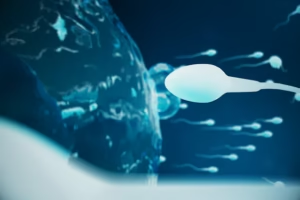
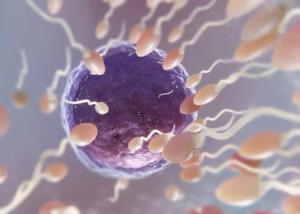
In natural conception, sperm must travel through the vagina, cervix, and into the uterus — losing the vast majority of their numbers along the way. With IUI, this long journey is bypassed. The sperm are delivered to a head start location, giving them a significantly better chance of reaching the egg.
IUI does not involve fertilization outside the body. The sperm and egg still meet inside the fallopian tube — the process just gets a major assist.
IUI vs. Natural Conception: What Changes
In natural intercourse, fewer than 5% of sperm make it past the cervix. IUI deposits washed, concentrated sperm directly into the uterine cavity — bypassing the cervical barrier entirely. Combined with ovulation monitoring, this can double or triple the sperm count reaching the egg.
How Is IUI Performed? Step-by-Step
The IUI process unfolds over the course of a full menstrual cycle. Here's exactly what happens at East Bay Fertility Center:
Baseline Ultrasound & Bloodwork (Day 2–3)
At the start of your cycle, Dr. Larry Andrew performs a transvaginal ultrasound to assess your ovaries and uterine lining, and orders baseline hormone levels (FSH, LH, estradiol, AMH). This ensures there are no cysts and establishes a starting point for the cycle.
⏱ Cycle Day 2–3Ovarian Stimulation (Optional but Common)
Many IUI cycles include ovarian stimulation with oral medications like Clomid (clomiphene citrate) or Letrozole, taken on Days 3–7. Some patients receive injectable gonadotropins (FSH/LH) for stronger stimulation. The goal is to ensure 1–2 mature follicles develop, improving the chance that an egg is available at insemination.
⏱ Cycle Days 3–7Follicle Monitoring Ultrasounds
Starting around Day 10–12, serial ultrasounds monitor the size and number of developing follicles. When the lead follicle reaches 18–22 mm, the trigger shot is given. This precision monitoring is one of the advantages of working with a fertility specialist over trying to time IUI at home with OPKs alone.
⏱ Days 10–13HCG or Lupron Trigger Shot
An injection of human chorionic gonadotropin (hCG) — or in some protocols, a Lupron trigger — is given when the follicle is mature. This mimics the natural LH surge and induces ovulation precisely 36 hours later. The IUI is then scheduled at the optimal time.
⏱ Trigger Day (typically Day 12–14)Sperm Collection & Washing
On the day of the procedure, a semen sample is collected (from partner or donor). The sample undergoes sperm washing in the lab — a process that separates motile, healthy sperm from seminal fluid, dead sperm, and debris. The result is a concentrated, high-motility sperm preparation in a small volume of sterile solution.
⏱ IUI Day (36 hrs post-trigger)The IUI Procedure
Dr. Larry Andrew uses a thin, flexible catheter to gently pass through the cervix and deposit the washed sperm directly into the uterine cavity. The procedure takes 10–15 minutes, is typically painless, and requires no anesthesia. Some women experience mild cramping. You rest briefly afterward, then resume normal activities.
⏱ ~15 minutes in-officeLuteal Phase Support & Pregnancy Test
Progesterone supplements (vaginal suppositories or injections) are often prescribed after IUI to support the uterine lining. A pregnancy test is performed 14 days after the procedure — the official "two-week wait." If negative, the team reviews results and discusses next steps.
⏱ Day 14 post-IUI: blood pregnancy testIUI Success Rates: What the Data Says
IUI success rates vary considerably based on the patient's age, diagnosis, and protocol. Here are typical per-cycle success rates by age group, based on published clinical literature:
Note: Cumulative success rates over 3–6 IUI cycles are significantly higher than per-cycle rates. Results vary by diagnosis. Consult Dr. Larry Andrew for personalized projections.
Who Is IUI Right For?
IUI is not the right treatment for everyone. Dr. Larry Andrew uses a thorough fertility workup to determine whether IUI is appropriate or whether a patient should skip to IVF. Here's a summary of IUI candidacy by diagnosis:
| Diagnosis / Situation | IUI Appropriateness | Notes |
|---|---|---|
| Mild male factor (low count/motility) | Good candidate | Sperm washing concentrates the best sperm |
| Unexplained infertility | Good candidate | Often first-line treatment with stimulation |
| Ovulatory dysfunction (PCOS, irregular cycles) | Good candidate | Combine with ovulation induction |
| Cervical factor infertility | Excellent candidate | IUI bypasses the cervix entirely |
| Same-sex female couples / single mothers | Excellent candidate | With donor sperm; straightforward protocol |
| Endometriosis (mild) | Fair candidate | Moderate success; may escalate to IVF |
| Severe male factor (very low sperm count) | Poor candidate | IVF with ICSI is preferred |
| Bilateral tubal blockage | Not appropriate | IVF required — tubes cannot be used |
| Diminished ovarian reserve (low AMH) | Variable | IVF often recommended for better egg utilization |
| Advanced maternal age (40+) | Limited | Success rates low; IVF often more efficient |
IUI vs. IVF: How to Decide
One of the most common questions Dr. Larry Andrew hears: "Should I try IUI first, or go straight to IVF?" The answer depends on your specific diagnosis, age, and how long you've already been trying. Here's a side-by-side comparison:
| Factor | IUI | IVF |
|---|---|---|
| How fertilization occurs | Inside the body (tubes) | In the laboratory |
| Invasiveness | Minimal — catheter placement | Moderate — egg retrieval under sedation |
| Success per cycle (under 35) | ~15–24% | ~50–60% |
| Cost per cycle | $700–$1,500 | $12,000–$20,000+ |
| Requires open tubes? | Yes — at least one tube must be open | No — tubes bypassed entirely |
| Genetic testing of embryos | Not possible | PGT available |
| Recommended cycles before escalating | 3–6 cycles | Usually 1–3 per fresh/frozen transfer |
Dr. Larry Andrew's Approach to IUI vs. IVF
"For patients under 38 with unexplained infertility or mild male factor, I often recommend starting with 2–3 stimulated IUI cycles. But for women over 40, those with known tubal damage, or couples with severe male factor, skipping IUI and moving to IVF is typically the more efficient — and ultimately more cost-effective — path to a baby."
What Affects IUI Success Rates?
- Patient age: Egg quality declines with age — the single most important factor in IUI (and any fertility treatment) success.
- Sperm quality: Total motile sperm count (TMSC) after washing should ideally exceed 10 million for good IUI prognosis.
- Use of ovarian stimulation: Stimulated IUI cycles (with Clomid, Letrozole, or injectables) consistently outperform natural IUI cycles.
- Number of follicles: 1–2 mature follicles is ideal. More than 3 increases multiple pregnancy risk.
- Timing precision: IUI timed with trigger shot to within 36 hours of ovulation is more effective than OPK-timed cycles.
- Endometrial thickness: A lining of ≥7–8 mm at insemination time is associated with better implantation.
- Duration of infertility: Shorter duration → better prognosis. If you've been trying for 3+ years, IVF may be more efficient.
Frequently Asked Questions About IUI
Why Choose East Bay Fertility Center for IUI?
East Bay Fertility and Hormone Therapy Center is a boutique, independently owned practice — not a corporate chain. Dr. Larry Andrew personally oversees every patient's care, from initial consultation through cycle monitoring and procedure. With over 30 years of experience, an 83% IVF success rate, and two conveniently located Utah County clinics, East Bay offers the personalized attention that larger clinics simply can't match.
Dr. Larry Andrew
Dr. Larry Andrew has dedicated over three decades to helping Utah County families build their families. As founder of East Bay Fertility Center, he specializes in IUI, IVF, ovulation induction, hormonal disorders, and male factor infertility. His patient-centered, boutique approach combines cutting-edge technology with compassionate individualized care — and results that speak for themselves: an 83% IVF success rate over 10 years.
Ready to Explore IUI at East Bay Fertility?
Dr. Larry Andrew will review your complete fertility history, order any needed diagnostic tests, and give you an honest assessment of whether IUI — or another treatment — gives you the best path to pregnancy. Same-week appointments available.
Schedule Your IUI Consultation